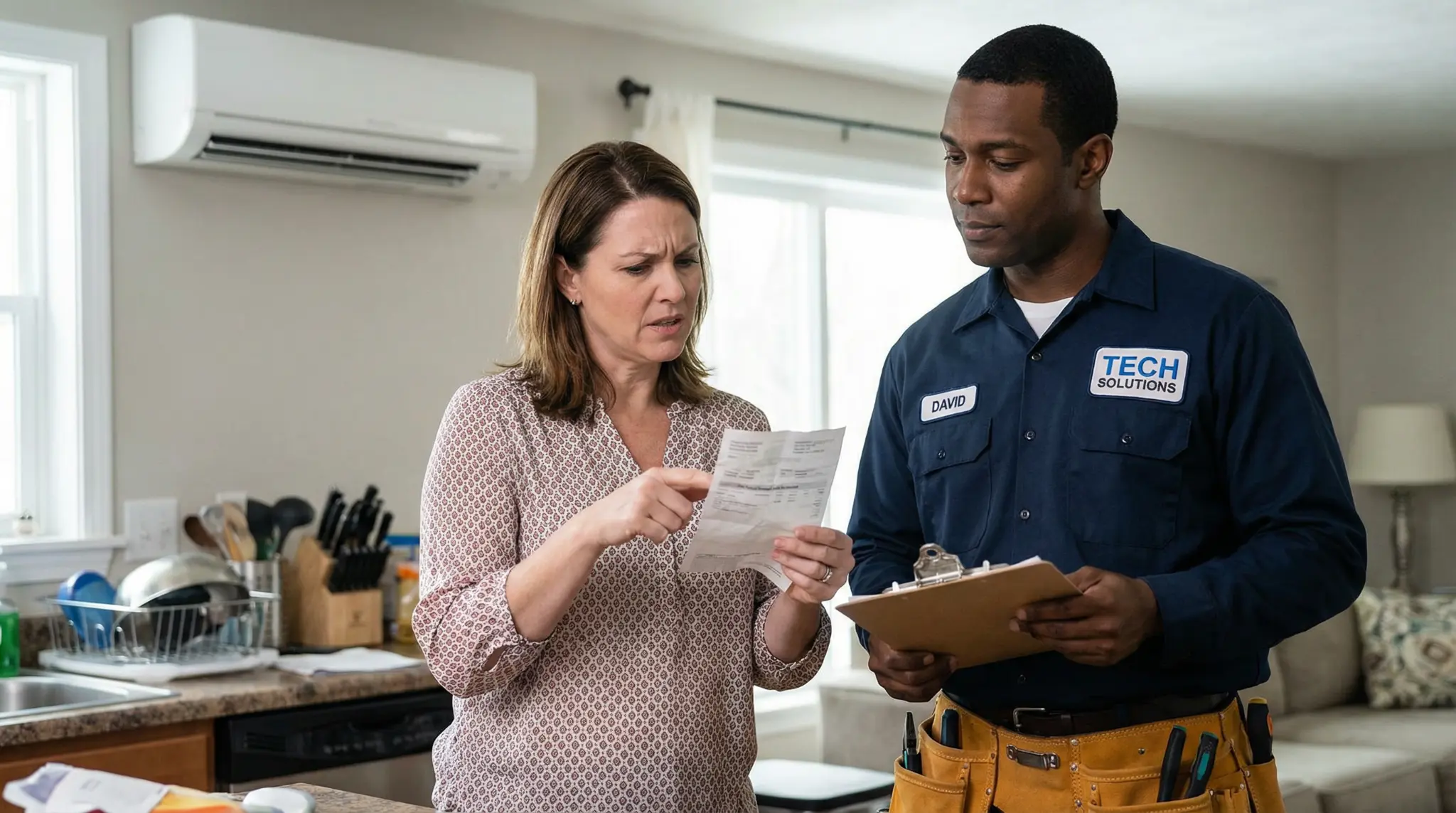
The "Broken" System
The HVAC industry has a huge reputation problem. Many homeowners believe that most AC contractors are scumbags[1] or con artists who are only out for a quick buck—and honestly, it’s not hard to see why.
You call a technician. They show up, spend a few minutes inspecting the system, and then delivers bad news with absolute certainty: "It's your compressor. It's no good. Replacing it is the only option and it'll be $2,500 to fix it, or... I can get you a deal on a whole new system today."
Immediately, you start to wonder: "Am I getting ripped off?"
And you’re not alone. The residential HVAC industry is built on a lack of transparency—complicated language, confusing pricing , and hidden fees—all designed to keep you in the dark so you won’t know what questions to ask or what you're actually paying for.
WALTON LAWRENCE, OWNER & CEO OF CARIBBEAN COOLING
This guide is your equalizer. After more than two decades in the HVAC industry and managing over 2,000 residential service calls, I know exactly how contractors price their work—and the underhanded tactics they use to get you to spend more.
But that all ends today.
As one of the largest AC vendors and parts suppliers in the Virgin Islands, I know the real cost of wholesale parts—and the unreasonably high markups some local contractors charge. I’m revealing everything so you can spot unfair pricing, secure the best rates, and avoid feeling ripped off, misled, or deceived when you receive an estimate for your next AC repair job.
The Anatomy of an HVAC Bill
First, let's break down the two main parts of any repair bill so you know exactly what you're looking at. Understanding these line items is your first line of defense against inflated quotes.
1The Service Call Fee (or Diagnostic Fee)
This is the flat fee a technician charges to come to your home and diagnose the problem. It covers their time, travel, and expertise. A fair service call fee is typically between $75 and $200.
Think of this as the 'ticket to entry.' It ensures the technician is compensated for their time even if no repair is performed. While some legitimate companies offer free service calls, be cautious about your overall experience: Do they provide transparent pricing? Are they pushy? A free diagnostic isn't a problem—high-pressure sales tactics are. And if a company charges more than $200 just to diagnose your issue, that's your first red flag.
2The Repair Cost
This is the cost of the parts and the labor to fix the issue. This is where prices can vary wildly, so let's look at some of the most common repairs.
Honest companies will be transparent about this cost. They might use a "flat rate" book (where the price is pre-determined based on the job) or "time and materials" (where you pay for the part plus an hourly labor rate). Both models are valid, but the end result should still fall within a reasonable range. If the repair cost seems astronomical compared to the complexity of the work—like $500 for a part that took five minutes to swap—you need to ask questions.
The "Fair Price" Cheat Sheet: Honest Price Ranges for Common HVAC Home Repairs
Before you sign anything, check these numbers. The table provides you with some of the most frequent repairs I see and what you should expect to pay. These are industry averages, so prices can vary based on your specific system and location. But this should give you a solid baseline of what you can expect to pay, including parts and labor. If your quote is double this, ask why. If it's triple, show them the door.
Insider Note: A capacitor—the most common failure point—costs a technician about $15 to $40 wholesale. A "fair" price covers their travel, insurance, and expertise. Anything beyond $500 is pure greed.
WARNING! 3 Red Flags No Homeowner Should Ignore
1. Refusal to Provide a Breakdown
The Pitch: "The total is $800. Just sign here."
The Truth: If a technician gives you a single, lump-sum price and won't break down the cost of parts vs. labor, be wary. Transparency is key. Legitimate businesses have nothing to hide and will gladly show you the cost of the component versus the cost of their time. Hiding everything under one big number allows them to mask exorbitant markups on cheap parts.
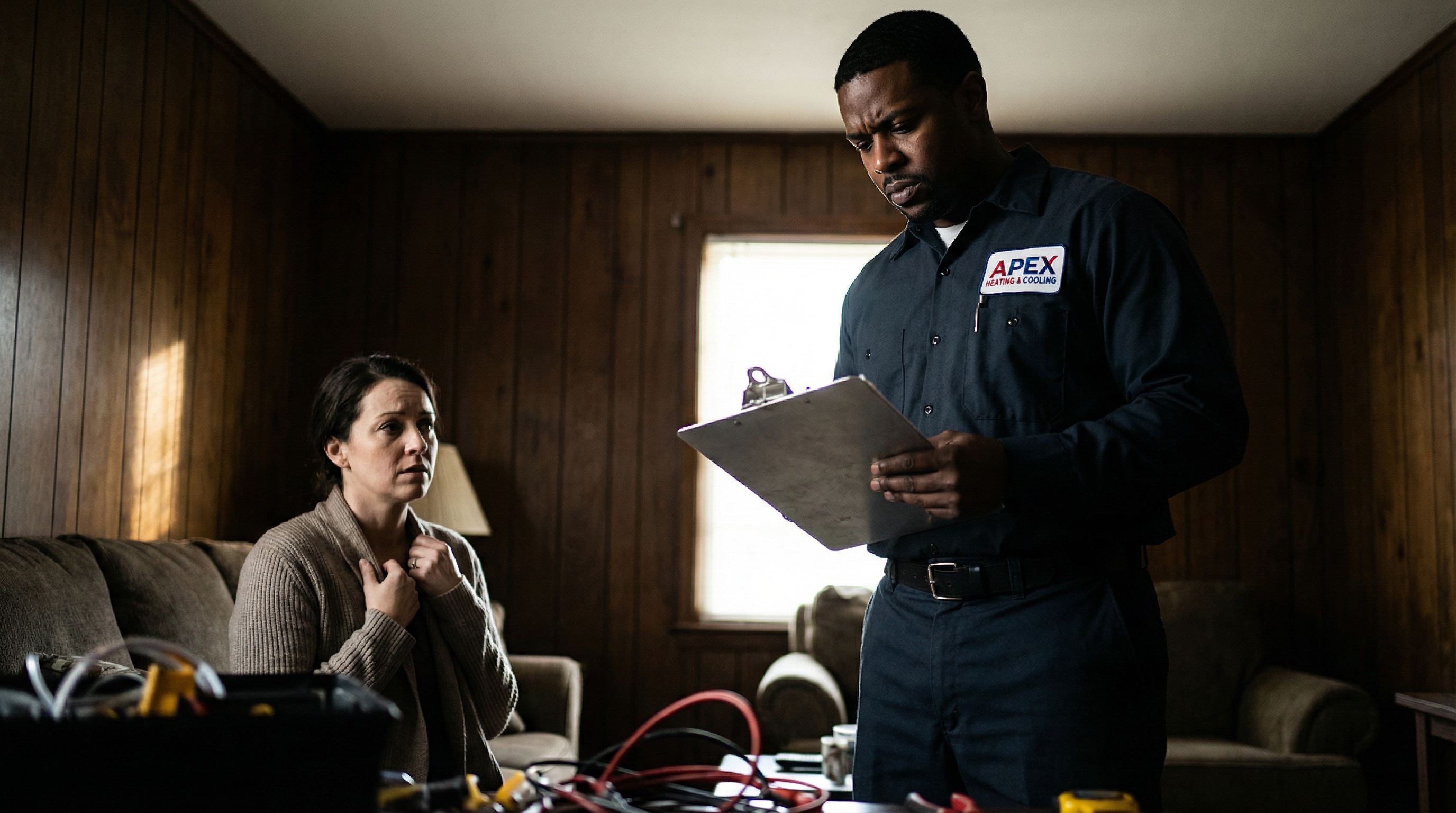
2. High-Pressure "Act Now" Tactics
The Pitch: "This price is only good for today," or "This is a fire hazard."
The Truth: These scare tactics are designed to make you panic and approve an inflated price. They prey on your fear of safety hazards or further damage to force a quick decision. A reputable pro knows that a few hours to think it over won't cause a catastrophe, and they will respect your need to make an informed choice.

3. Vague or Missing Warranties
The Pitch: "Don't worry, we guarantee our work." (But nothing is in writing).
The Truth: If a technician can't clearly explain what's covered under warranty—both for parts and labor—that's a problem. A verbal promise is worthless once they drive away. You need to know exactly how long the repair is guaranteed for, and whether you'll be on the hook for another service call fee if the same part fails next week.
What Fair Pricing Should Include
When you pay for a repair, you're not just paying for a part. You're paying for:
- A licensed and insured technician's expertise.
- A warranty on both the parts and the labor.
- The peace of mind that the job was done correctly and safely.
"An honest company will stand behind their work. They'll explain the problem, give you clear options, and provide a detailed invoice."
WALTON LAWRENCE, OWNER & CEO OF CARIBBEAN COOLING
How to Fight Back
Knowledge is leverage. When a technician gives you a diagnosis, use these three phrases to change the dynamic back in your favor:
Make them physically point out the failure. If they can't show you, it might not exist.
Watch their body language. An honest tech will agree; a con artist will panic.
Knowing the pricing model helps you understand why a 15-minute job costs $400.
The Bottom Line
Your AC is a machine, not a mystery. It breaks in predictable ways, and those breaks have predictable costs.
There are thousands of honest, hard-working HVAC technicians who want to keep your family cool. But until you can tell the difference between a pro and a predator, your wallet is on the line.
Stay cool. Stay skeptical. Stay informed.
Tired of money-grabbing air conditioning contractors who put profit over quality? Take this free Local HVAC Pro Assessment and get matched with a trusted, certified AC specialist near you. Start the FREE assessment →
About the author

Walton D. Lawrence
Walton is a licensed HVAC contractor on St. Croix with over 25 years of field experience. After witnessing the rise of misleading information and predatory sales tactics in the industry, he started this column to bring transparency back to the trade. He is a member of the Disadvantaged Business Enterprise (DBE) Program—which promotes fair competition among trade businesses. To schedule your free consultation, click here.